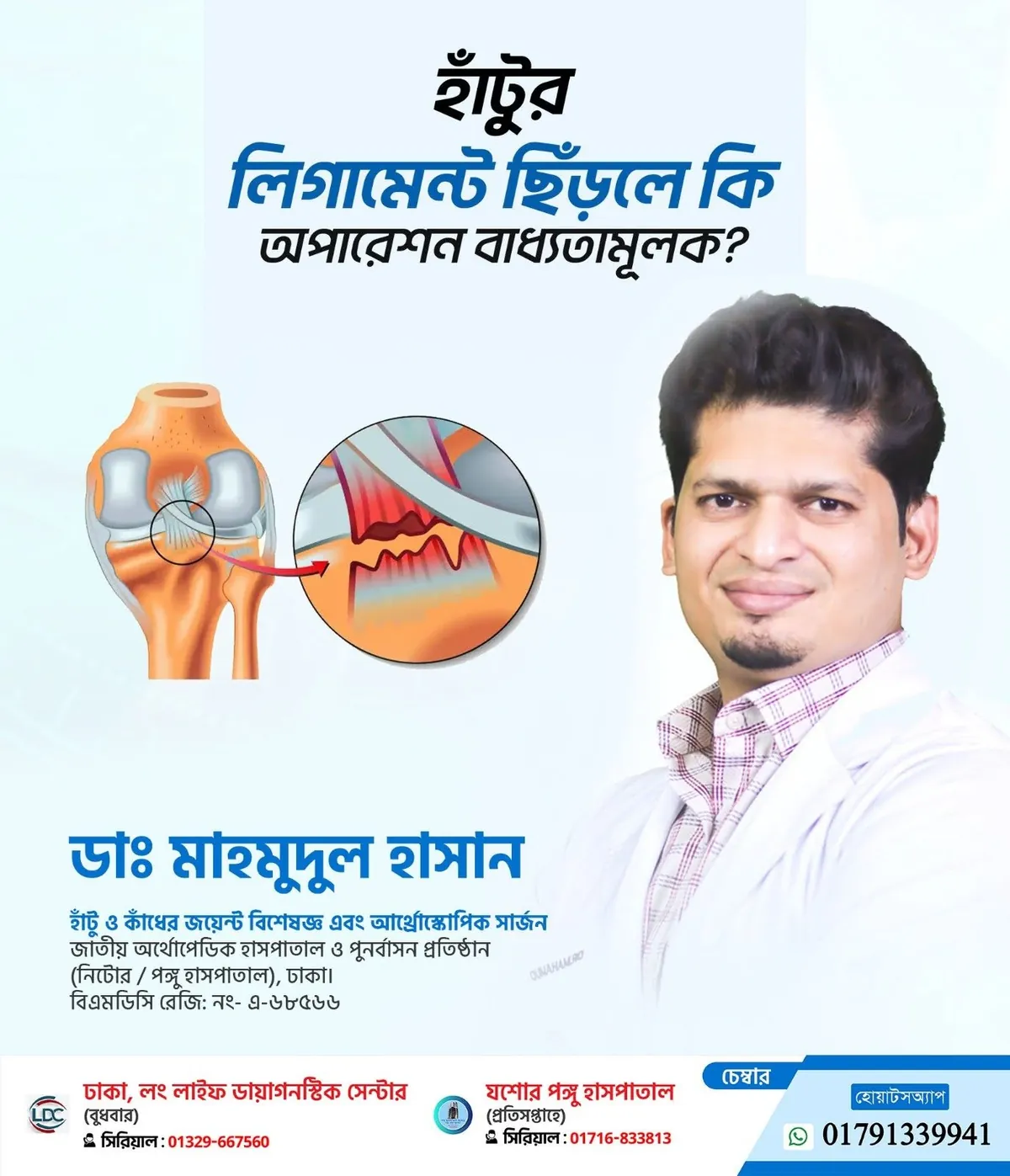
What is the ACL?
The anterior cruciate ligament (ACL) is one of the main ligaments that keeps the knee stable, especially during twisting, turning and jumping. It is commonly injured in football, cricket, kabaddi, road accidents and falls.
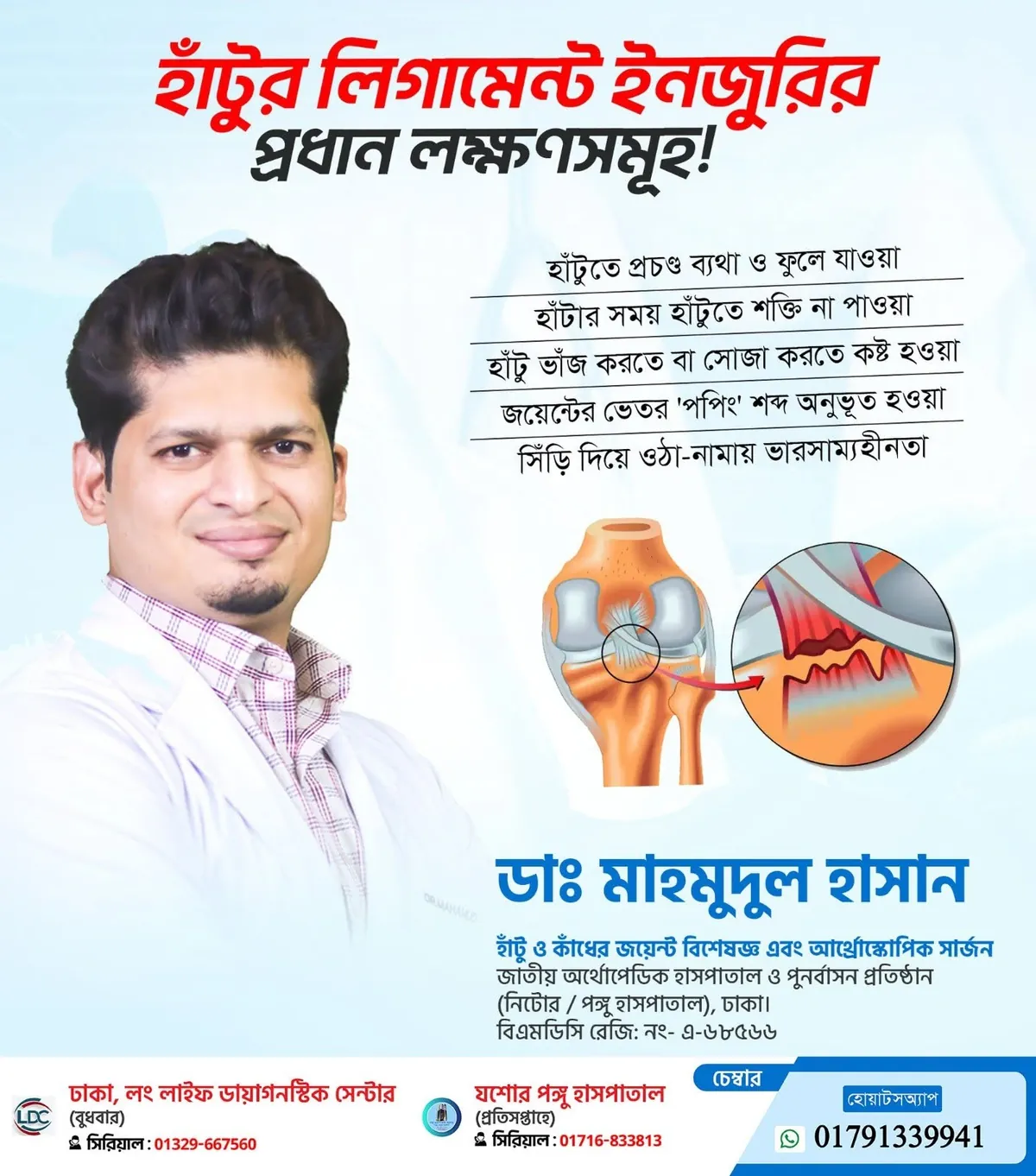
Signs of an ACL tear
- A “pop” felt or heard at the time of injury
- Rapid swelling of the knee within hours
- A feeling that the knee gives way or is unstable when turning
- Difficulty returning to sport
Do all ACL tears need surgery?
Not always. Some less active patients manage well with a structured strengthening programme. Surgery is usually advised for young and active people, those whose knee keeps giving way, and when the meniscus is also injured — because repeated instability can damage the cartilage over time.
How ACL reconstruction is done
The torn ligament is replaced with a graft, most often taken from the patient's own hamstring tendons, and fixed in position through small arthroscopic incisions. Any associated meniscus tear can be treated in the same operation.
Recovery and return to sport
Walking with support usually begins soon after surgery. Physiotherapy is the most important part of recovery: movement first, then strength, balance and running. Return to competitive sport is generally considered after several months — often nine months or more — once strength and control tests are satisfactory.
Watch: Patient Stories
This page explains the treatment in general terms. Whether it is right for you is decided only after an examination and review of your X-ray or MRI.