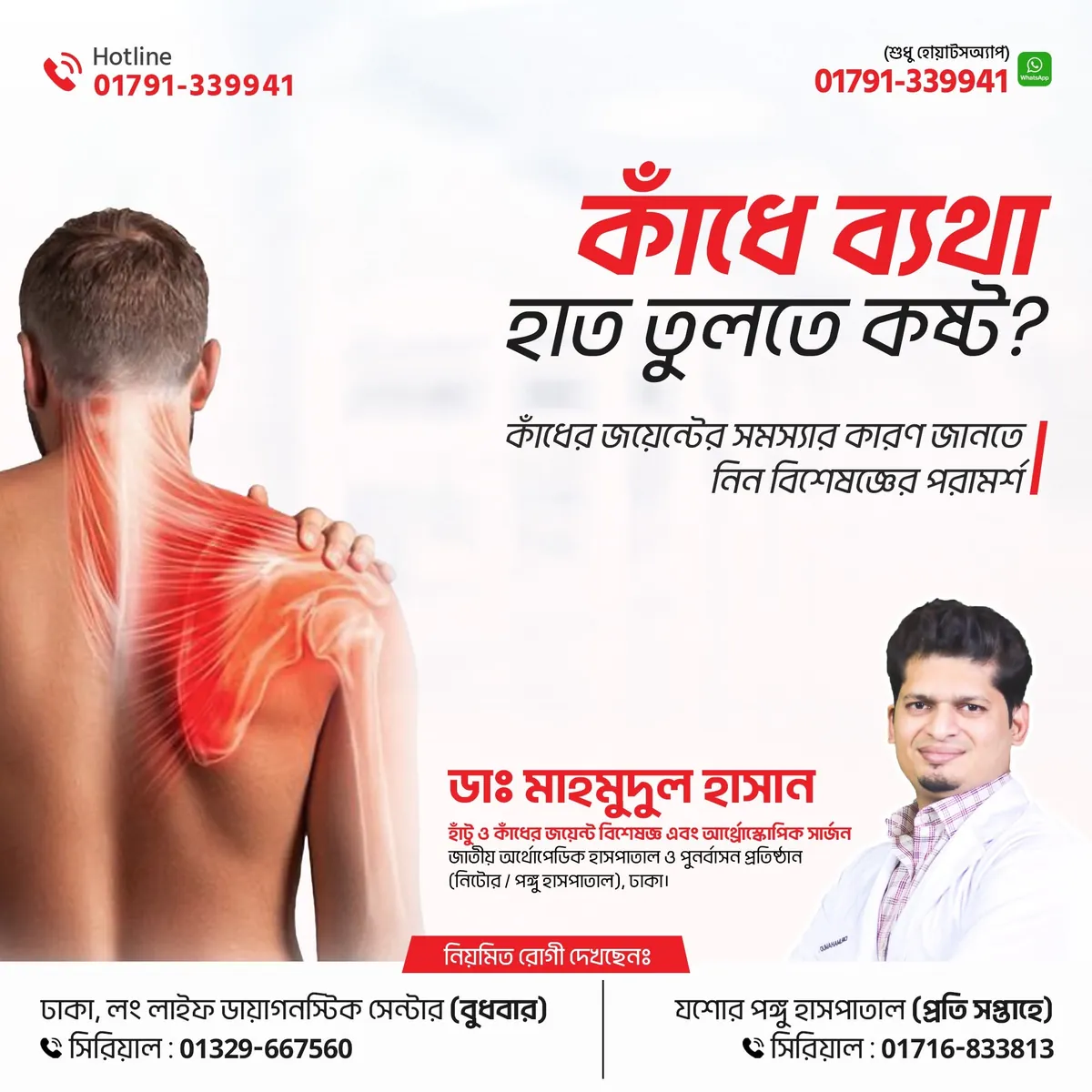
What is frozen shoulder?
Frozen shoulder (adhesive capsulitis) happens when the capsule around the shoulder joint becomes inflamed, thickened and tight. It causes severe pain and gradual loss of movement. It is especially common between the ages of 40 and 60 and in people with diabetes or thyroid problems.
The three phases
- Freezing — increasing pain, particularly at night
- Frozen — pain eases but the shoulder is very stiff
- Thawing — movement slowly returns
Treatment
Without treatment, recovery can take a long time. Most patients improve with pain relief, specific stretching exercises and, in selected cases, a guided injection into the joint. Good blood-sugar control also helps.
If stiffness persists despite adequate treatment, arthroscopic capsular release can free the tight capsule, followed by intensive physiotherapy to maintain the regained movement.
This page explains the treatment in general terms. Whether it is right for you is decided only after an examination and review of your X-ray or MRI.