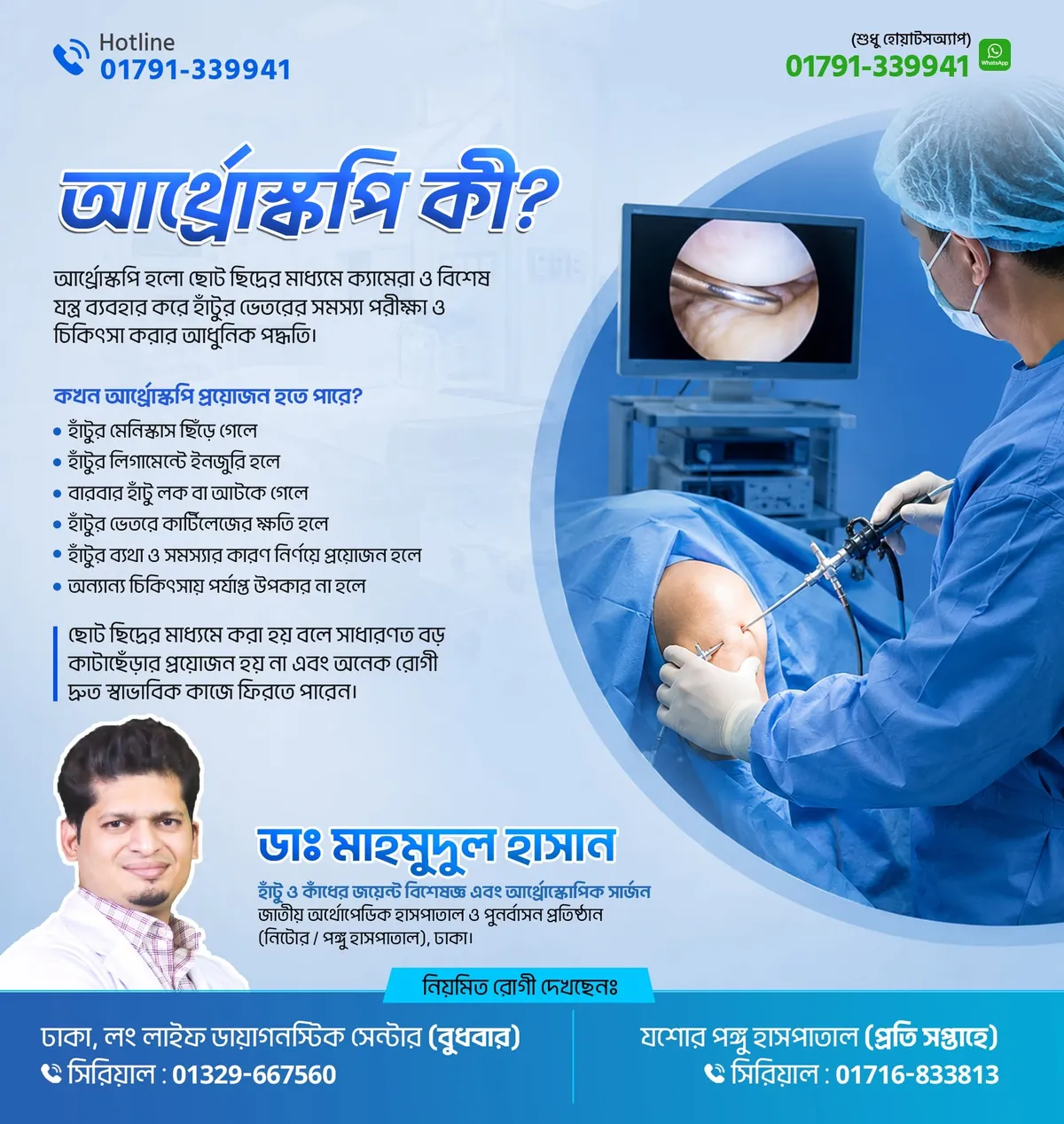
What is knee arthroscopy?
Knee arthroscopy is a minimally invasive, or keyhole, operation. A pencil-thin camera (the arthroscope) is passed into the knee through a small cut, and fine instruments are used through one or two other small openings. The surgeon sees the inside of the joint magnified on a screen and can diagnose and treat the problem at the same time.
Which knee problems can it treat?
- Meniscus tears — trimming or repairing torn cartilage
- ACL and PCL ligament injuries (as part of reconstruction)
- Loose pieces of bone or cartilage causing locking
- Inflamed joint lining (synovitis) and some cartilage injuries
- Kneecap (patella) instability and tracking problems
Benefits compared with open surgery
Because the cuts are small, most patients have less pain, less scarring and a shorter hospital stay. Many arthroscopic procedures are done as day-care or with a one-night stay, and walking usually starts early with support.
What to expect
Your visit begins with a clinical examination and review of your X-ray and MRI. If arthroscopy is recommended, the procedure is explained step by step, including anaesthesia, expected recovery and possible risks. After surgery, a physiotherapy plan helps you regain movement and strength.
Recovery
Recovery depends on what is done inside the knee. After a simple clean-up many people return to desk work within one to two weeks; a meniscus repair or ligament reconstruction needs a longer, structured rehabilitation. Your personalised plan will be discussed before surgery.
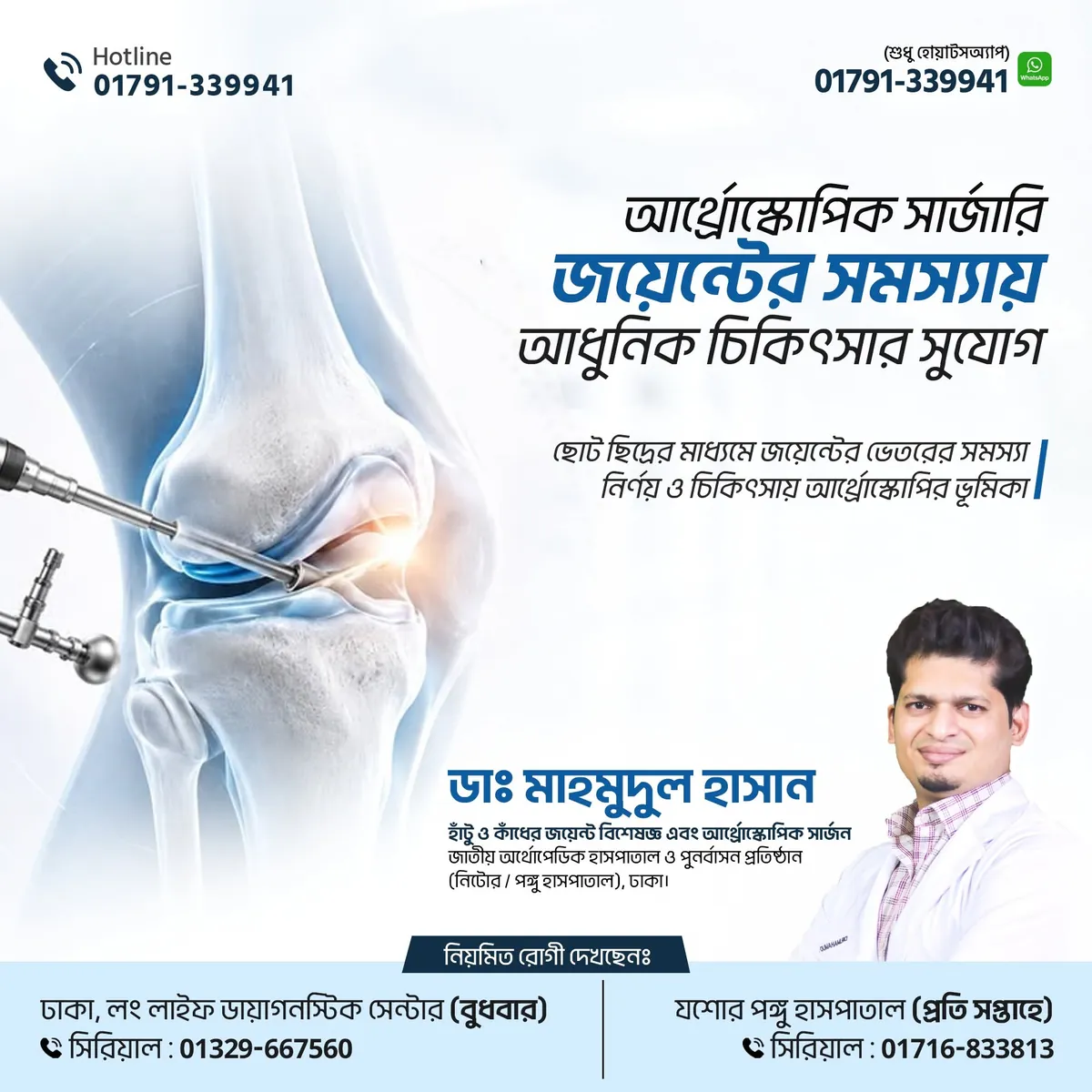
This page explains the treatment in general terms. Whether it is right for you is decided only after an examination and review of your X-ray or MRI.